

How to Declutter a Parent’s Home After They Pass Away: Katherine’s Story & Tips to Help You Through the Process
If you’ve ever walked into your parent’s home after they’ve passed away—or after they’ve moved into a care facility—and felt instantly overwhelmed, you are not alone.
The combination of grief, responsibility, pressure to move quickly, and rooms full of belongings can leave anyone unsure where to begin. Add family tensions, time constraints, or long-distance logistics, and the process becomes even more difficult.
This post shares the story of “Katherine,” (name changed for privacy), an only child who found herself responsible for clearing her mother’s belongings after her passing. She lived in a small apartment and knew she couldn’t keep very many of her mother’s belongings, and she wanted to stop paying for storage fees. Her experience is unique in the details, but very common in the feelings and challenges adult children face.
Along the way, I’ll share tips you can use if you are preparing to clear a parent’s home or handle their estate—whether the items are still in the house or already in storage.
Katherine’s Story: The Emotional Weight of Clearing a Parent’s Estate
As an only child with limited support and her own health challenges, Katherine had been dreading the task for months. Her mother’s very large home had been sold quickly after her passing, and everything was packed by movers and brought to four storage units.
But before all of that, the challenge actually began in her mother’s home.
A Home Filled With Decades of Belongings
Katherine’s mother kept everything:
- inherited items from multiple generations
- business paperwork, supplies, and promotional materials
- crafting materials
- sentimental items
- unopened purchases
- holiday décor
- furniture
- countless everyday objects
Like many parents who lived in one home for decades, her mom had accumulated belongings slowly, consistently, and with deep emotional attachment.
Tip: Expect that your parent’s home will contain more than you imagined. This doesn’t reflect on your parent or on you—it’s simply the reality of living a long, full life.
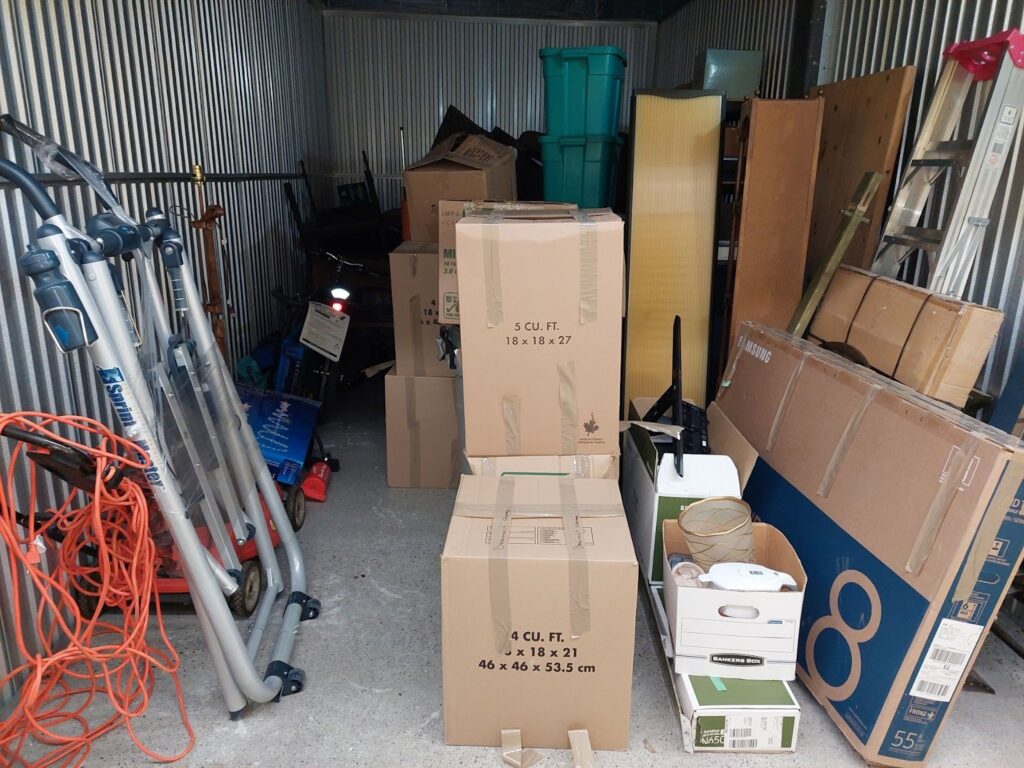
Smallest Storage Unit
The First Challenge: Deciding Where to Start
Clearing a parent’s home requires thousands of decisions, many of them small but emotionally loaded.
Some of the biggest questions adult children face include:
- What do I keep?
- What would my parent want me to keep?
- What is worth selling?
- What should be donated?
- How do I deal with the guilt of letting go?
- How do I manage this while grieving?
Tip: There is no “right” place to begin. Start where you feel the least emotional weight. Or start with categories like garbage, recycling, expired items, or broken items.
Small progress builds confidence.
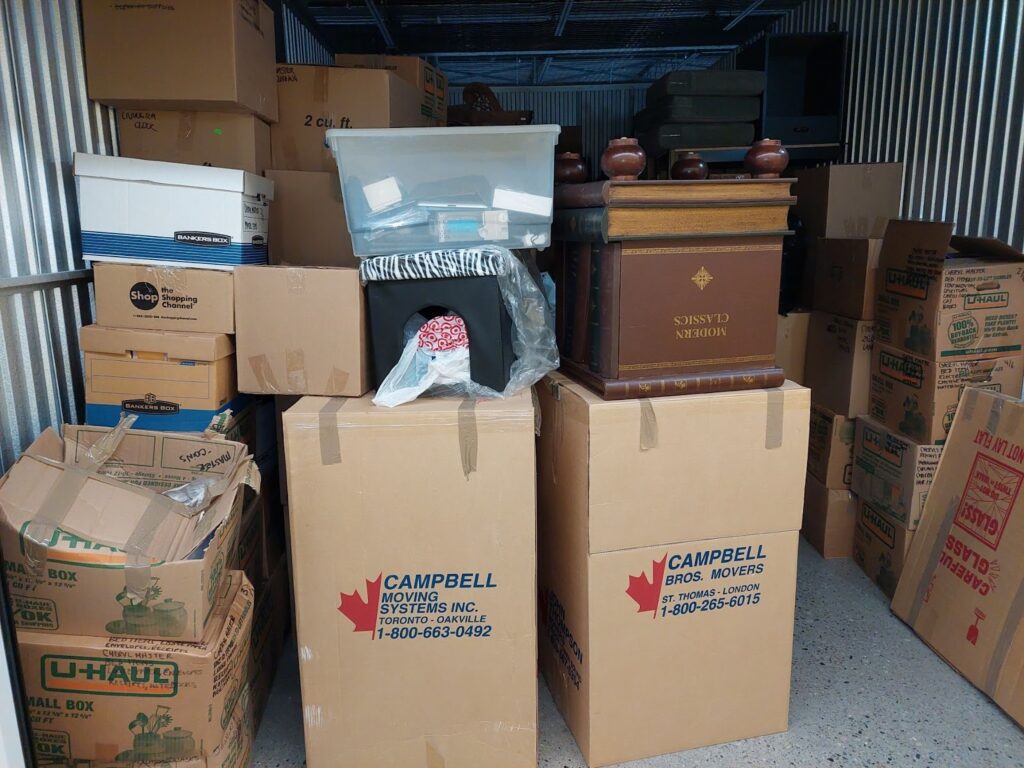
Largest (double depth!) storage unit
When Everything Ends Up in Storage
Because of the quick timeline of the house sale and Katherine’s limited capacity at the time, everything was packed by movers and moved to storage before she could sort any of it. This is very common.
If you are clearing a parent’s home and you are short on time, energy, physical help, or emotional bandwidth, this may happen to you too.
Tip: Moving everything to storage first is not a failure. It is a strategy.
It buys time.
It allows you to grieve.
It lets you return to the task when you have more capacity.
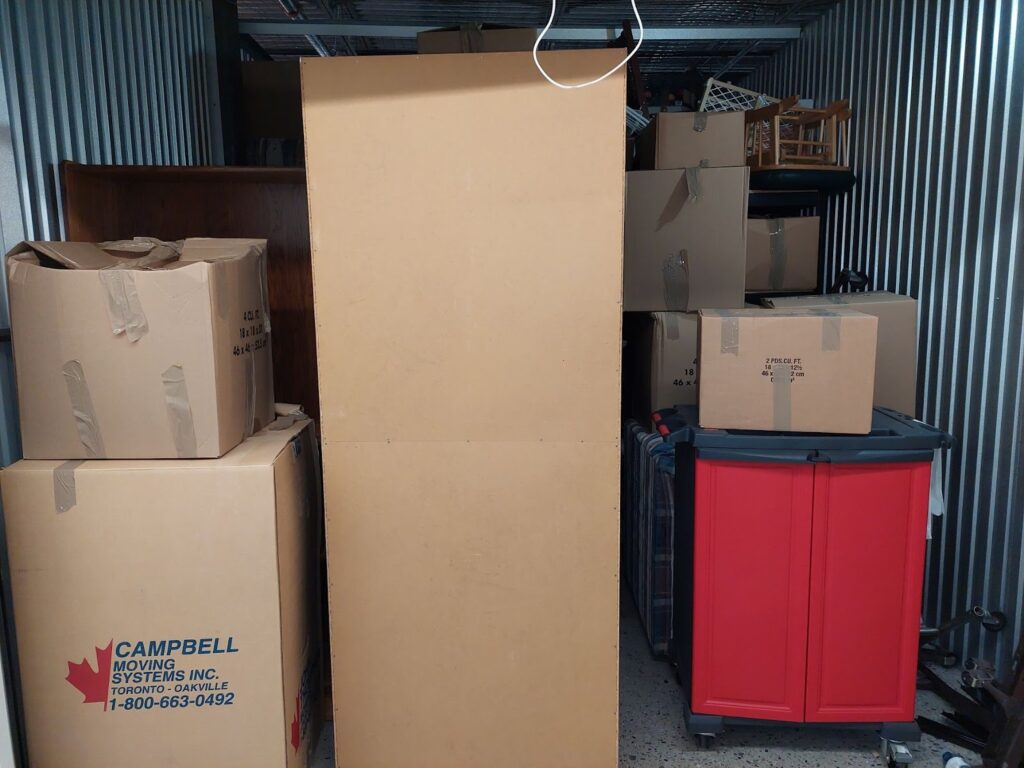
Medium Storage Unit – too dense to see the back
Sorting Sentimental Items: What Do You Keep?
As Katherine worked through her mother’s belongings, she made a list of the truly meaningful items she hoped to find:
- Her grandparents’ wedding album
- A very old family Bible
- Sentimental Christmas ornaments
- Favourite pieces of her mom’s jewelry
- Her grandmother’s bin of yarn
Almost everything else was negotiable. And that’s key.
Tip: You do not need to keep everything that was sentimental to your parent. Keep what is meaningful to you.

Katherine’s grandparents’ wedding album was found after several sessions
Letting Go Without Guilt
As we worked through her mother’s possessions, Katherine struggled at times with feelings of guilt:
- Guilt about not keeping more
- Guilt about letting go of items her mother cherished
- Guilt about the cost of storing everything
- Guilt about the time it was taking
But through the process, she realized:
Keeping things you don’t want doesn’t honour your parent. It burdens you. Letting go is not disrespectful. It is a form of care for yourself.
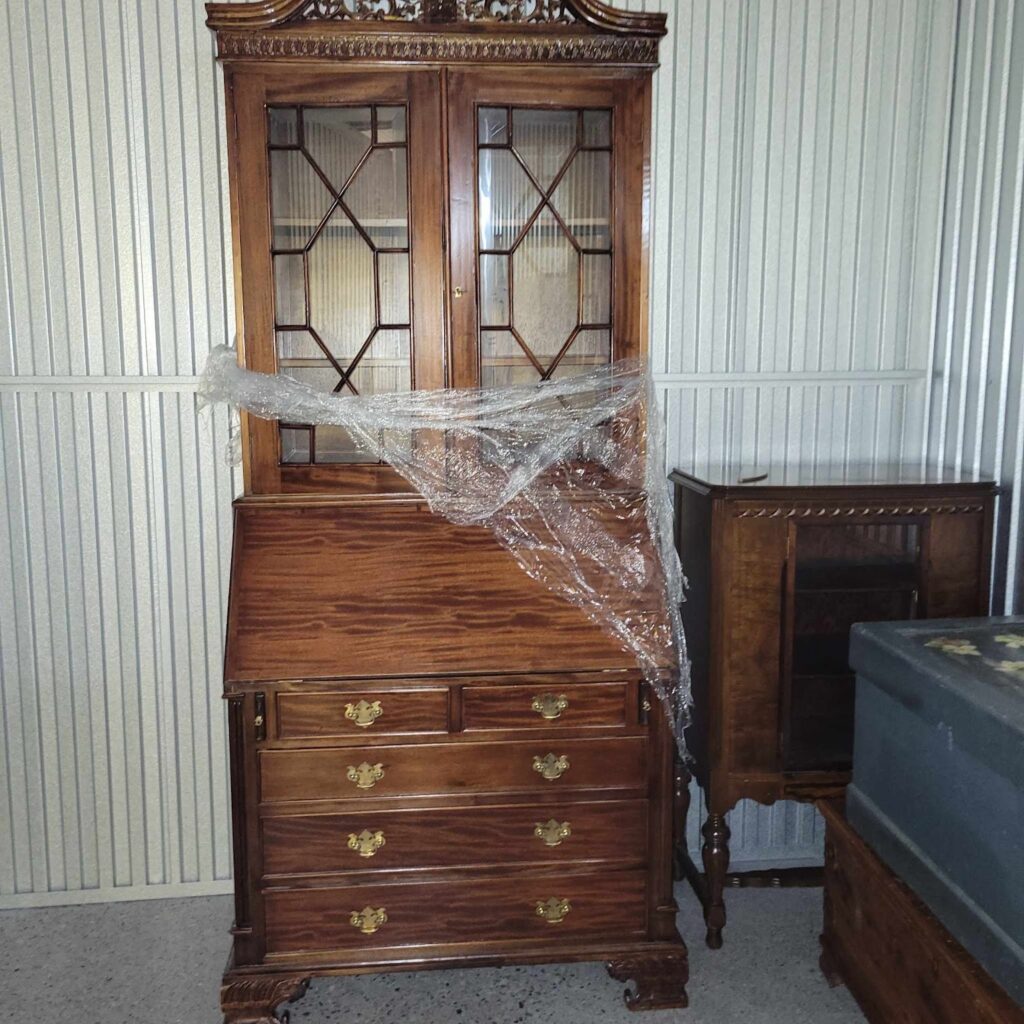
A few furniture pieces that Katherine let go of because she lived in a small apartment
Help Makes All the Difference
Katherine hired me and my team because:
- She was overwhelmed
- She couldn’t physically manage the lifting
- She was unsure what to do with so many items
- She needed accountability
- She needed emotional support
- She needed the process to move forward efficiently
If you’re clearing a parent’s home (or estate), support can make the difference between staying stuck and making steady progress.
Support can come from:
- Siblings
- Close friends
- Neighbours
- Your parent’s friends
- A professional organizer
- Specialized estate clean-out services
- A junk removal company
- Donation pickup services
- An online auction or estate sale company
- A combination of all of the above
You do not have to do this alone.

Some of my team members and I after a long day of helping Katherine sort and declutter
Key Tips for Clearing a Parent’s Home After They Pass Away
Here are the most important lessons Katherine’s experience can teach anyone facing a similar task:
1. Start with the easiest categories
Trash, recycling, expired items, broken items. Clearing “obvious decisions” first builds momentum.
2. Keep only the best of the sentimental items
Choose the meaningful 10%, not the overwhelming 100%.
3. Decide early what you will not be selling
Selling requires time, energy, space, photos, and communication. It is not always worth it, especially if your time is better spent making decisions about other items.
4. Create a short list of “must-find” sentimental items
It gives you clarity and purpose and it gives you a reason to celebrate from time to time through this journey.
5. Take breaks because your heart needs them
Decision fatigue can derail your progress if you push too hard.
6. Expect emotional waves
Grief and decluttering bring up memories, regrets, and moments of joy. All of it is normal.
7. Get help if you need it
Clearing a parent’s belongings is not a one-person job.

A big milestone: the double storage unit was empty!
Katherine’s Journey (Briefly Continued)
Katherine’s story continues in Part 2, where her mother’s belongings, packed into four full storage units, had to be sorted, downsized, and decluttered over the course of a year.
If you want to learn how to tackle storage units (your own or a parent’s), don’t miss it.
Which of the tips in this post resonates most with you?
If you need help decluttering or organizing, contact me for in-person organizing services in the Mississauga area, or virtual organizing services anywhere else.
Happy organizing!

I am a professional organizer and author, ready to help you declutter and organize the overwhelming areas in your home and develop systems that will work with your family’s lifestyle to help keep you organized!
